![CM [2006 - 2010]](/uploads/Hyundai_Santa_Fe_2006-2010_.jpg)
![DM [2012 - 2016]](/uploads/Hyundai_Santa_Fe_2012_-_3.jpg)

With proper use of the heating, air conditioning and ventilation system, a comfortable microclimate is created in the passenger compartment and moisture condensation on the glass is excluded, which impairs visibility. The engine must be running for the system to heat or cool the air.
The heating, air conditioning and ventilation system of the passenger compartment is a single complex that provides the most comfortable conditions in the car, regardless of weather conditions and ambient temperature. The system includes a heater (increases the air temperature in all operating modes of the system), an air conditioner (its cooling unit reduces air temperature and humidity) and a control unit for mixing cold and hot air to achieve the required air temperature in the passenger compartment.
Outside air can enter the passenger compartment through the door windows with the windows down and the air intake box located in front of the windscreen. Air from the air supply box enters the vehicle interior through the wind window blowing nozzles, side and central nozzles, through the lower nozzles of the heater body.
The system provides low-inertia regulation of the air temperature, practically independent of the vehicle speed.
The heating, air conditioning and ventilation system uses two sensors - a sun sensor and a temperature sensor.
The amount, temperature, direction and intensity of air flows are controlled by switches installed in the control unit for the heating, air conditioning and interior ventilation system (Santa Fe climate control unit).
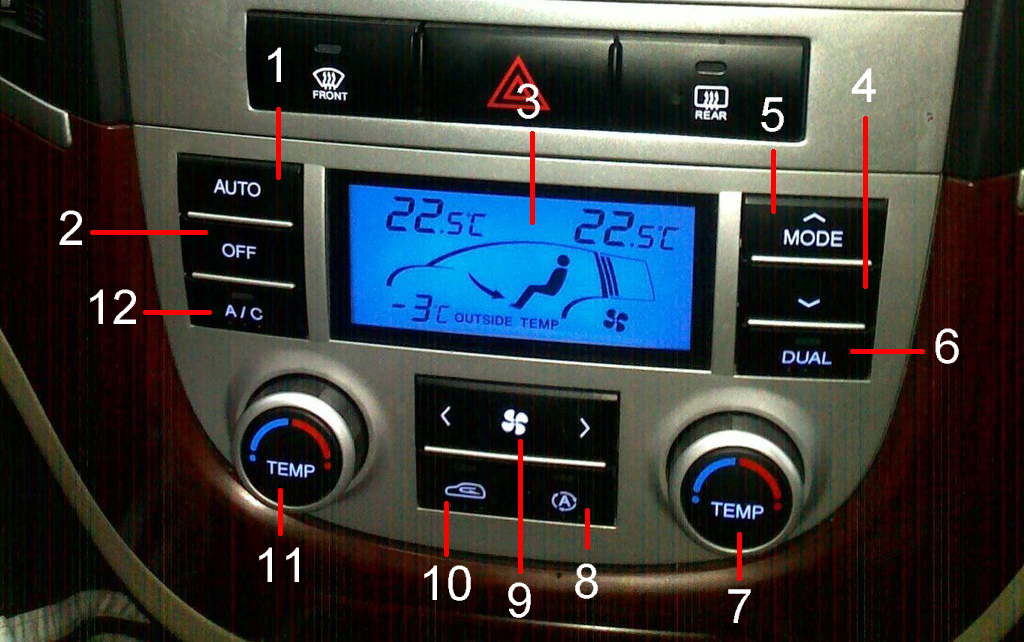
Heating, air conditioning and ventilation control unit:
1 - automatic mode activation key;
2 - key for turning on the heating, air conditioning and ventilation system;
3 - display;
4, 5 - key for selecting the direction of air flow distribution in the passenger compartment;
6 - key for selecting the interior temperature adjustment mode;
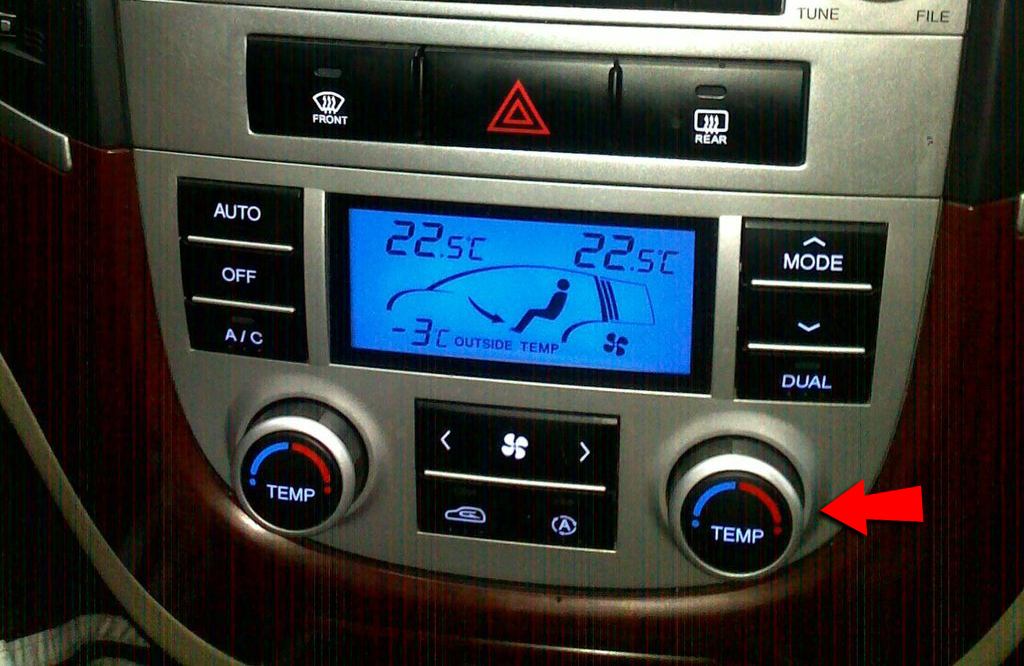
7 - knob of the temperature regulator on the right side of the passenger compartment;
8 - key for turning on the automatic recirculation mode;
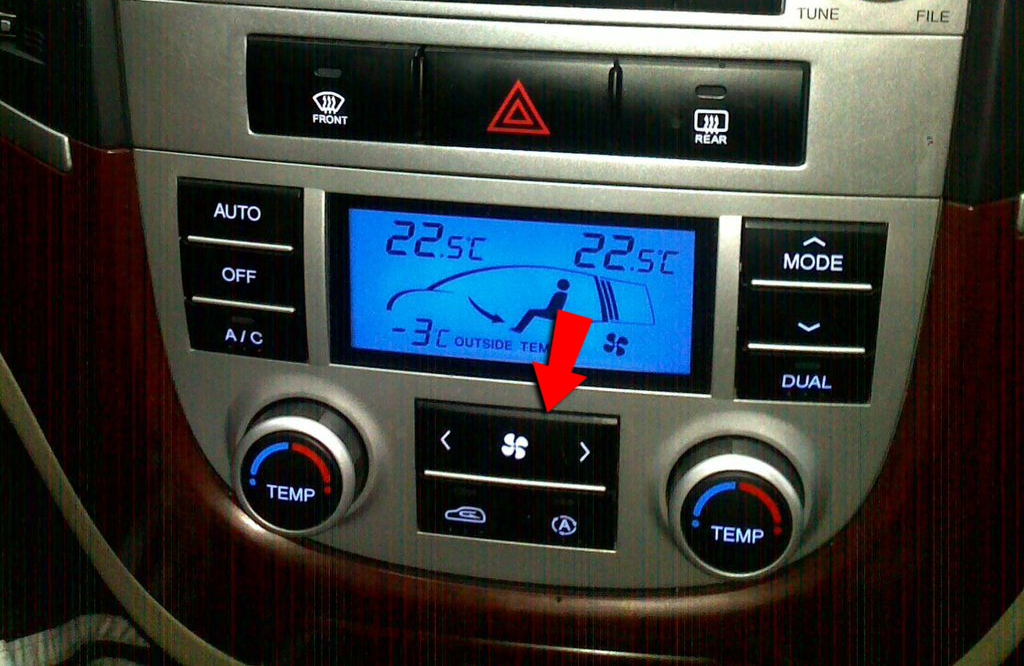
9 - fan speed regulator key;
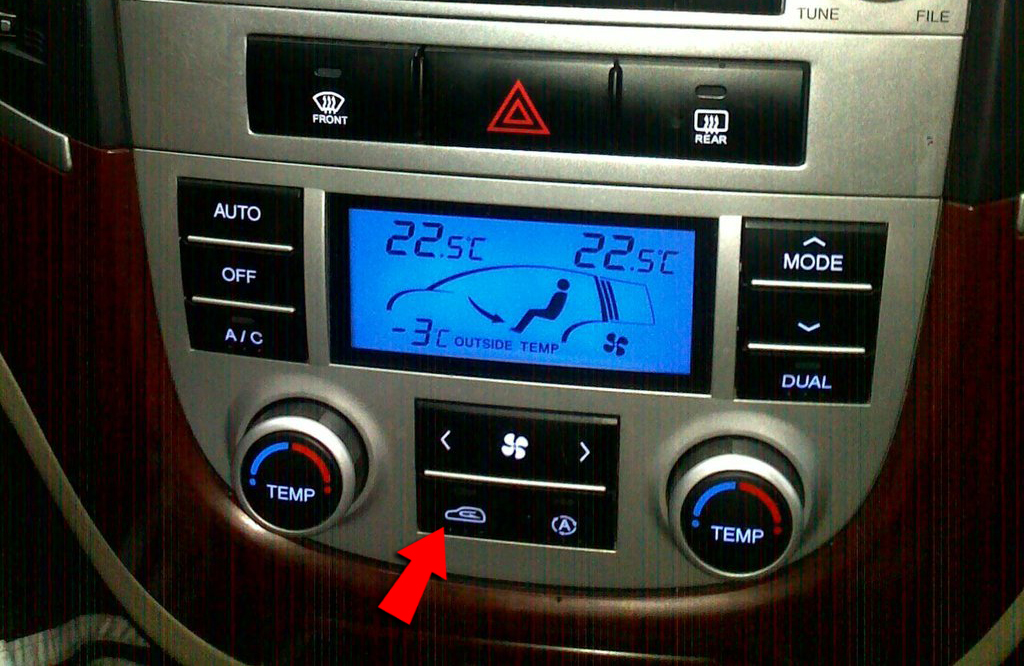
10 - key for turning on / off the air recirculation mode;
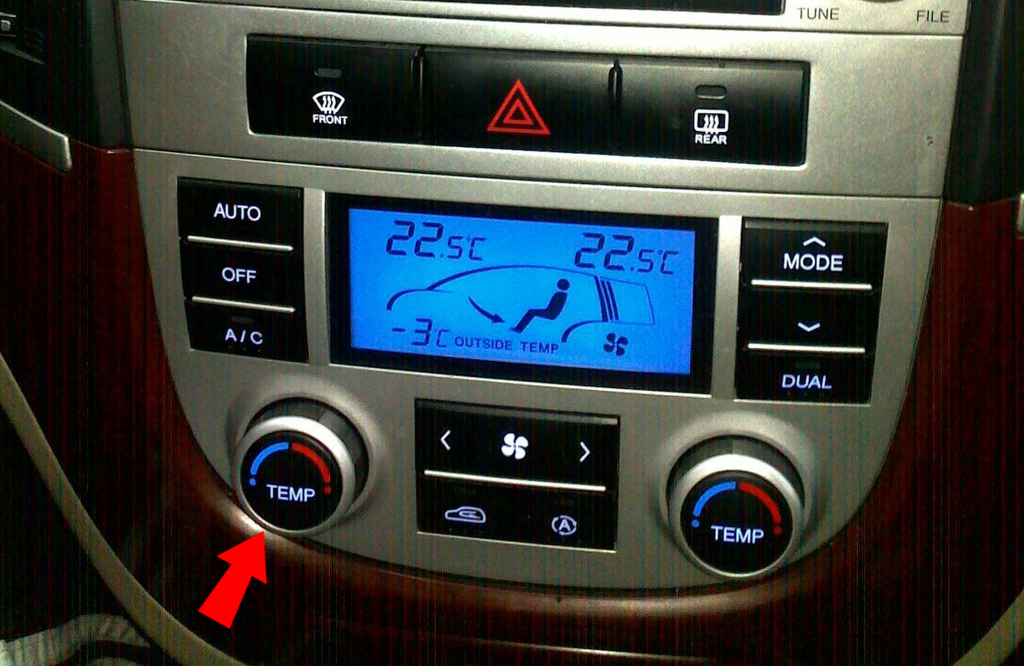
11 - knob of the temperature regulator of the left side of the passenger compartment;
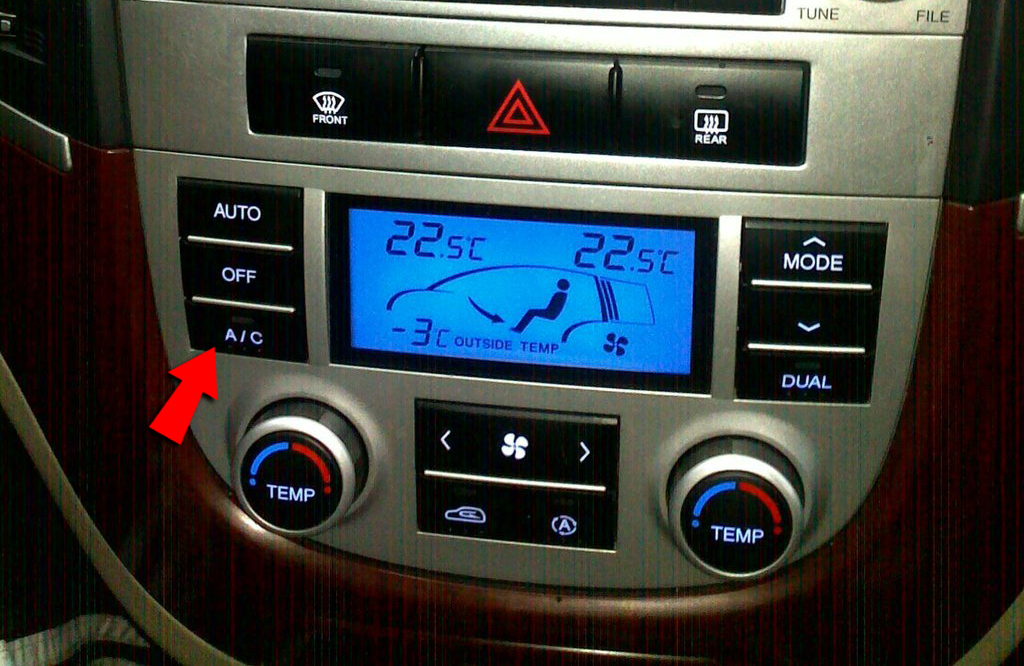
12 - key for turning on the air conditioner.
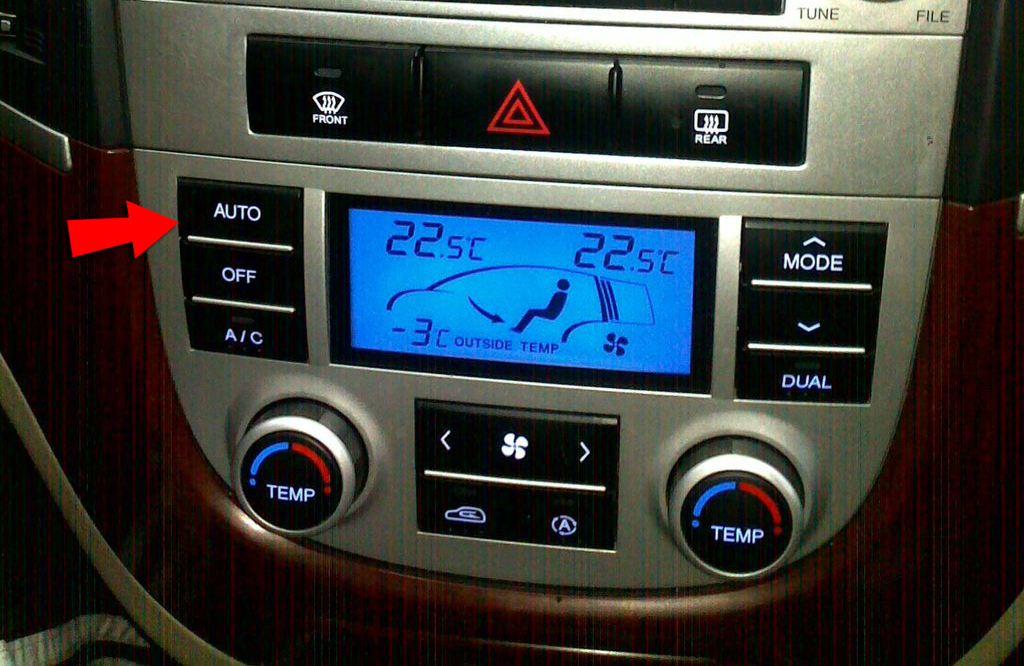
1. Key to enable automatic mode. By pressing the button once, the automatic mode of the microclimate control system is activated.
Note:
At high temperatures outside and inside, recirculation is automatically activated in the "AUTO" mode to quickly cool the passenger compartment. After reaching the set temperature, the system automatically switches to the outdoor air supply mode.
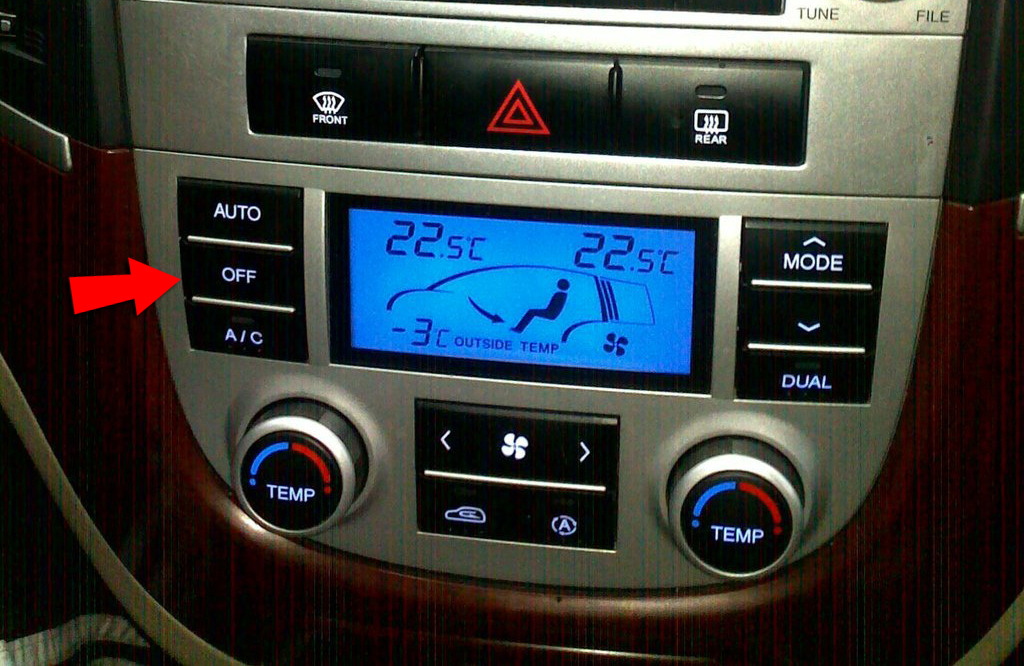
2. Key for turning off the heating, air conditioning and ventilation system. When you press the button, the heating, air conditioning and ventilation system is completely turned off.
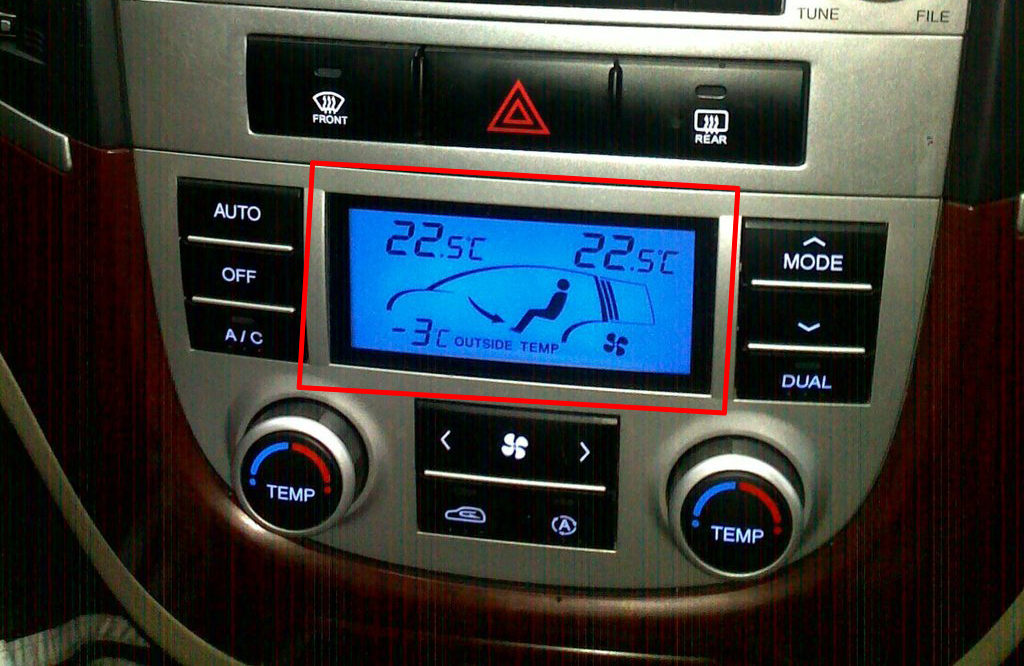
3. Display. It displays the operating mode of the system, the set temperature, air distribution and fan speed.
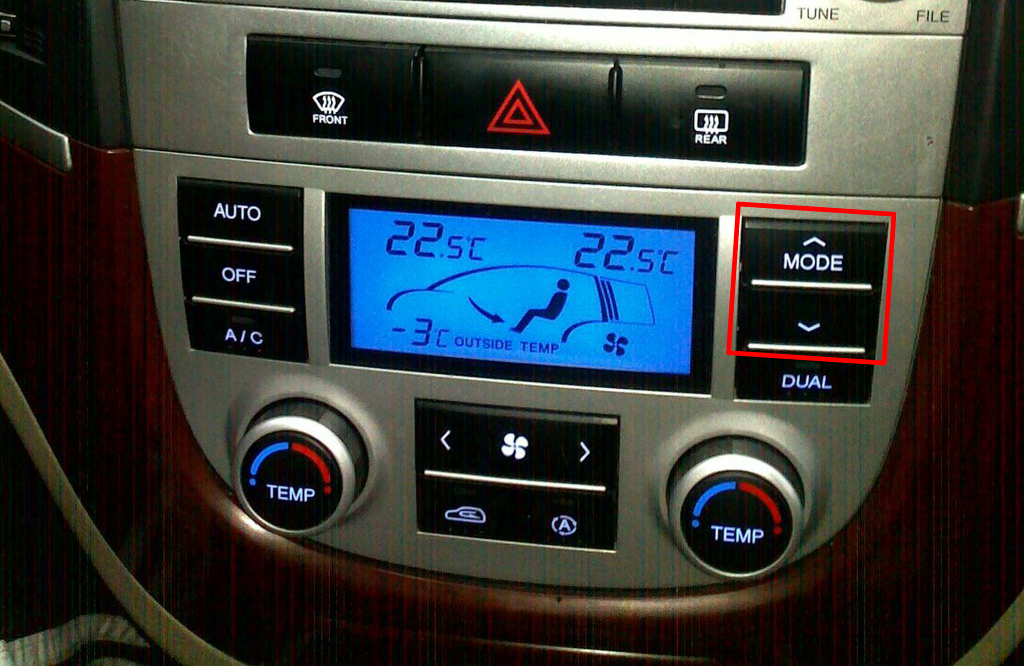
4, 5 - Button for selecting the direction of air flows in the passenger compartment. Pressing the up or down key changes the selected direction.
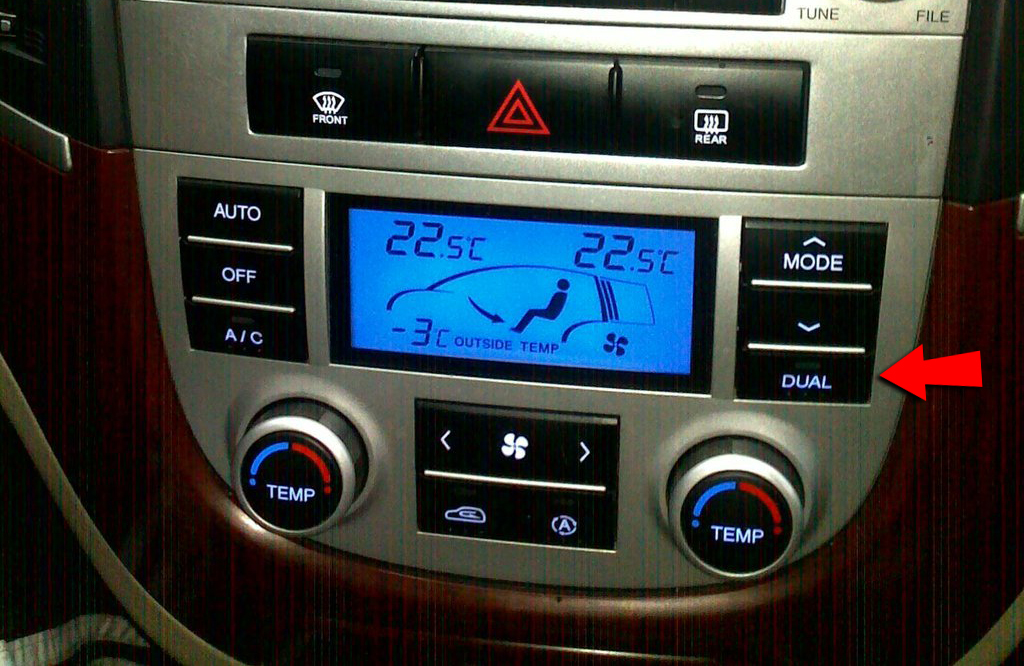
6. Key for selecting the mode for adjusting the temperature in the passenger compartment. When the warning light is on, the temperature regime for the driver and the passenger is regulated separately. When the button is pressed, the warning lamp goes out, the driver temperature setting overrides the passenger temperature setting. By pressing the button again or by using the temperature regulator 7 for the right-hand side of the passenger compartment, the separate setting mode is automatically activated and the indicator comes on.
7. The handle of the temperature regulator on the right side of the passenger compartment. Turn the knob clockwise to increase the air temperature, counterclockwise to decrease the temperature (see this article for more details ).
8. Key to enable automatic mode. A single press of the button turns on the automatic mode of the recirculation system.
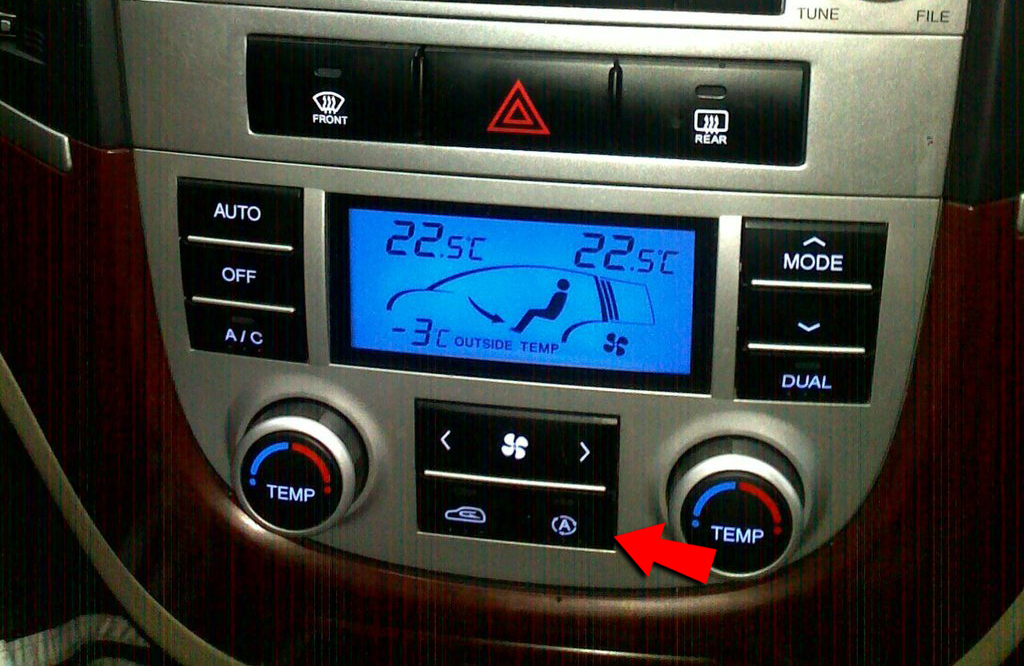
Note:
At high temperatures outside and inside, recirculation is automatically activated in the "AUTO" mode to quickly cool the passenger compartment. After reaching the set temperature, the system automatically switches to the outdoor air supply mode.
9. Fan speed regulator key. To increase the fan speed, press on the right side of the button, to decrease - on the left side.
10. Button of air recirculation Hyundai Santa Fe . When the button is pressed, the air circulates in the passenger compartment in a closed cycle; when the button is pressed again, the air enters the passenger compartment from the outside.
11. The handle of the temperature regulator on the left side of the passenger compartment. Turn the knob clockwise to increase the air temperature, counterclockwise to decrease the temperature (see this article for more details).
12. Air conditioner on / off key. To turn on the air conditioner, press the button, while the indicator in the button will light up. To turn off the air conditioner, press the button again - the indicator goes off and the Hyundai Santa Fe air conditioner turns off.
The ventilation and heating system of the Hyundai Santa Fe interior, depending on the various combinations of switching on the switches of the control unit, operates in the following basic modes:
1. Maximum cooling mode. It is used in hot weather and after a long stay in the sun to quickly cool the air in the cabin. In this case, before turning on the air conditioner, it is recommended to open the windows for a while to remove the heated air from the passenger compartment. The air conditioner and recirculation air switches must be off.
2. Normal cooling mode. Used when traveling around the city and outside the city in moderately warm weather. The air conditioner switch must be on, the recirculation switch must be off.
3. Ventilation mode. It is used in the off-season, which is characterized by low temperatures.
4. Maximum heating mode. It is used at very low ambient temperatures and for quick warming up of the air in the passenger compartment after a long stay. The air conditioner switch must be off, the recirculation switch must be on.
5. Normal heating mode. It is used in the cold season to maintain the optimum air temperature in the passenger compartment after intensive heating in the maximum heating mode. The air conditioner and recirculation air switches must be off.
6. The mode of blowing windshield and glass of the front doors. It is used to quickly eliminate fogging of glass in high humidity. The air conditioner switch can be in any position depending on the ambient temperature, and the recirculation switch must be turned off.
Useful advice:
For more efficient ventilation and heating at a vehicle speed of less than 50 km / h and when driving through extremely dusty road sections with closed windows (to create excess air pressure in the cabin, preventing dust from sucking in), we recommend switching the heater fan to low or maximum speed with the switch.
To quickly eliminate fogging of the rear window and release it from ice and snow, turn on the glass heating switch.
If you do not use the air conditioner for a long time, you need to turn it on briefly once a week with the engine running to restore the lubricant layer on the compressor parts and seals.
Source: http://carpedia.club/