![T31 [2007 - 2011]](/uploads/-_2009.jpg)


Note:
Checking the condition of the shock absorbers on the Nissan X-Trail must be carried out in accordance with the maintenance plan. It will also be advisable to combine with checking the front and rear suspension.
A quality check is best done at special stands in dealerships. You can independently check the condition of the shock absorbers only by external signs.
It is best to check the performance of shock absorbers on the Nissan X-Trail after a long trip, while the working fluid in them has not had time to cool down.
Checking the technical condition of Nissan X-Trail shock absorbers
1. Park the vehicle on a level surface and turn off the ignition.

2. Vigorously swing the front of the body in a vertical direction with your hands.
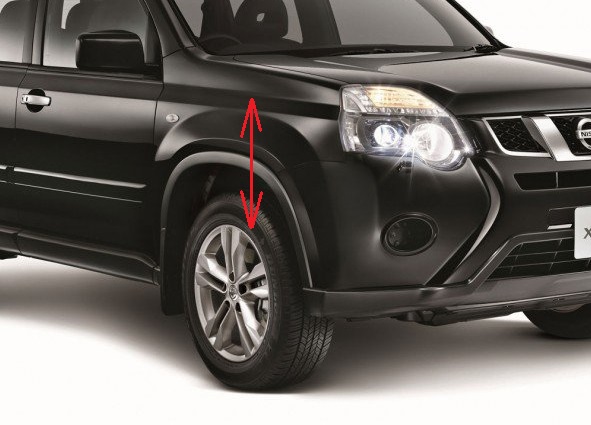
If, after stopping the rocking, the body continues to make more than 2 up and down movements by inertia, then one or both shock absorber struts are faulty.
3. To determine which rack is faulty, repeat the rocking first on one side of the car, and then on the other.
Note:
This method of verification allows you to determine only completely faulty shock absorber struts. It is possible to check the effectiveness of vibration damping by shock absorber struts and compliance with all technical parameters only on a special stand.
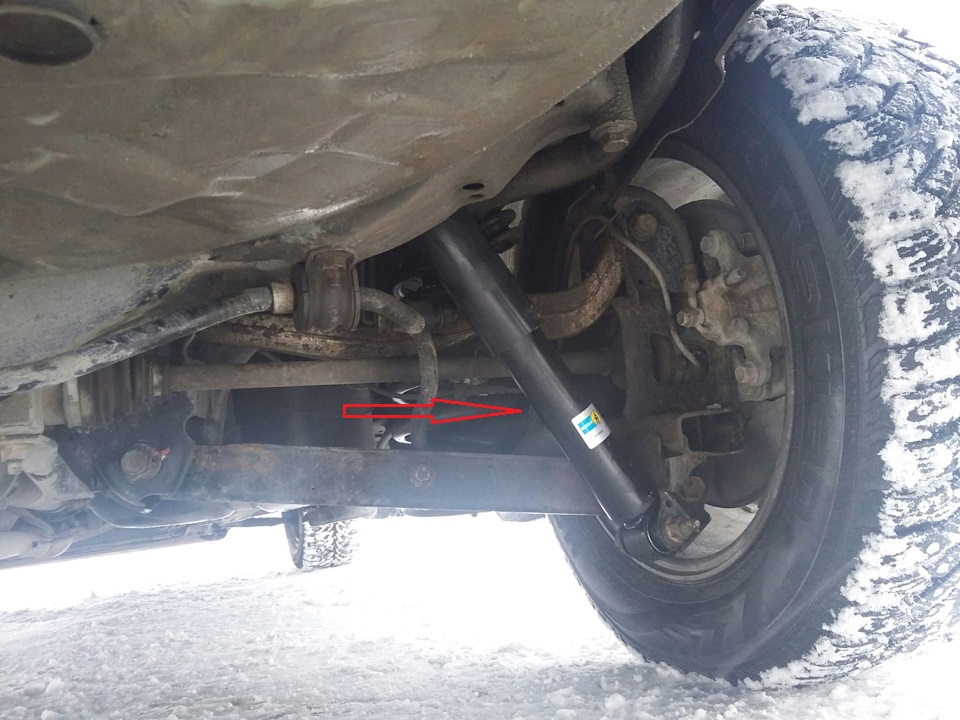
4. In the same way, check also the condition of the rear shock absorbers.
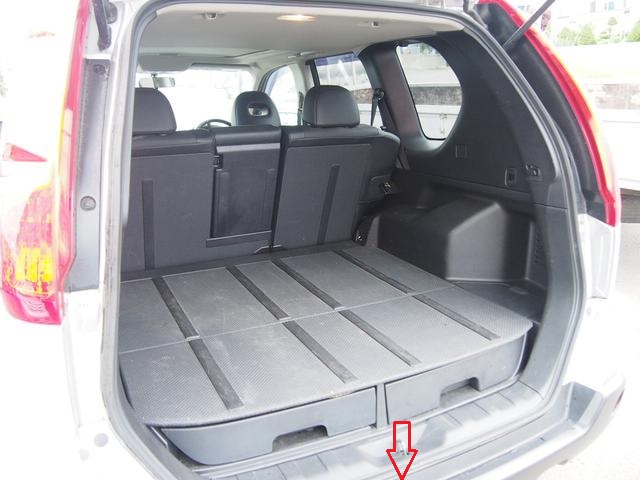
5. Lift up the rod guards and inspect the front shock seals. Leakage of the working fluid is not allowed.
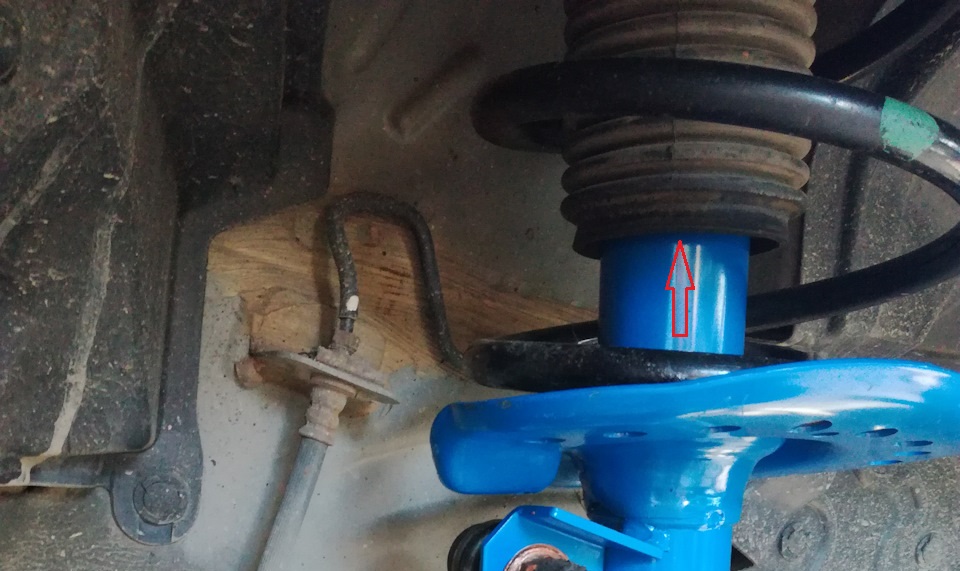
6. Check up a condition of protective covers of forward shock-absorbers. Sand, snow and dirt, falling on the shock absorber rod, increase the intensity of their wear.
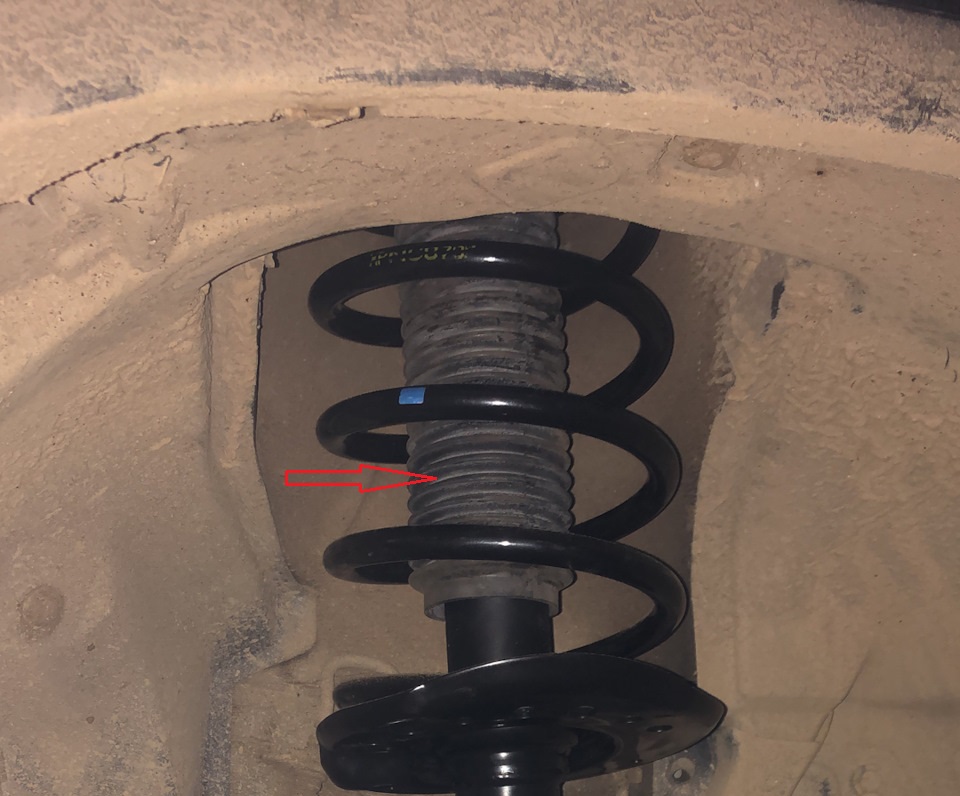
7. Check up a condition of details of forward shock-absorber racks. Sagging or bursting springs, as well as deformed racks, will need to be replaced with new ones.
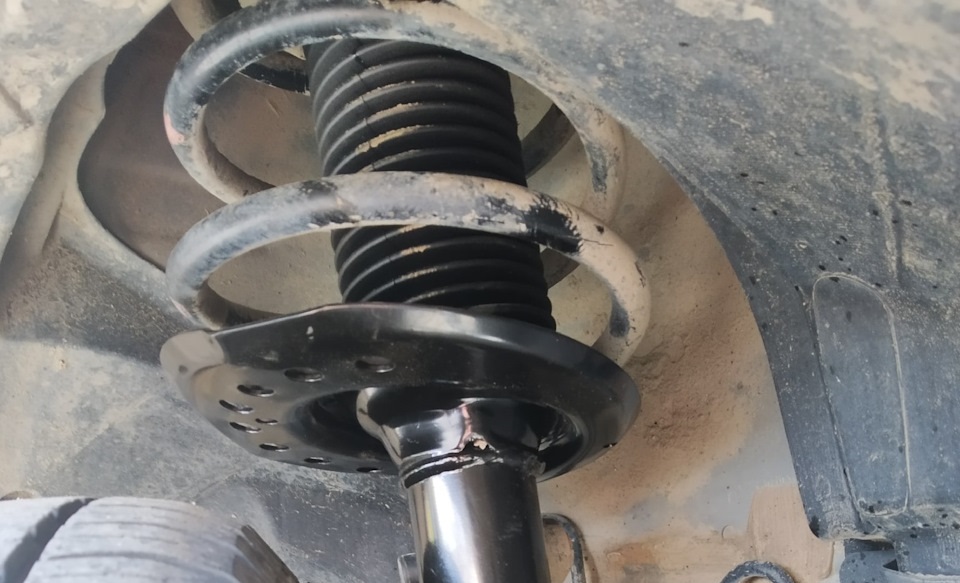
8. In the same way, check the rear shock absorbers.
Note:
If you are not completely sure of their condition, remove the shock absorbers and check their performance. To do this, check them in turn, sinking and pulling the stem several times. Tensile strength should be 3-4 times greater than that of compression. Also, the rod should move smoothly throughout its entire stroke. If any faults are found, the shock absorbers must be replaced.
Source: carpedia.club