![IX [2000 - 2005]](/uploads/mitsubishi_lancer_2005_images_2.jpg)
![X [2007 - 2017]](/uploads/Mitsubishi_Lancer_Sedan_2007.jpg)


I decided to write this post due to the fact that there was a need to replace, and most importantly, very scarce and contradictory information on the forums, and even without pictures (they are no good from a smart repair book). Well, I hope that for someone the scribble presented here with pictures will someday be useful. I will sign in more detail, but who is too lazy to read everything, you can skip the next 2 paragraphs. So how it all started...
It all started with the fact that my wife and I were returning home last Friday in anticipation of the weekend. We were chatting about something, when suddenly on the Moscow Ring Road at 120 km / h, for no reason at all, an oil dish lights up. He turned off the engine and rolled to the side of the road. I immediately checked the oil - I had to add a little (whoever does not eat oil with this engine is blatantly lying!), But the level was still normal. And I didn't find any leaks under the car. Looking for some - went out and immediately caught fire. I gave it gas up to 5000 rpm - it went out, but then it lit up again at high speeds. But I did not notice any extraneous sounds. As a result, with grief in half, he reached Golyanovo and left the car there, went home on foot. At night they returned to the Civic and pulled home on a rope. And near the house, the oiler practically did not burn at first after 3000 revolutions, and then it began to burn again at any speed.
After reading the info on the Internet, it became clear that the problem is common, but I did not find it in the pictures of the manual. And besides, some argued that the replacement is very difficult, the sensor is located right next to the oil filter and access to it is only from below, that there is a very tight wire chip (those who understand it know how the Japs like to stick connectors everywhere that you can’t disconnect), and at the services they beat 2-3 rubles for a replacement. Others said that you can change for inexpensively and not for long. As a result, it's useful to do today.
First, we remove the box with the air filter, because it is more convenient to crawl up to the sensor from the side of the left (driver's) wheel. Next, we take the head at 27 (preferably long) and begin to unscrew. Who does not have a long head, we bend the contact of the sensor so that it does not stick out.
Here is the culprit of our concern, with a bent terminal. 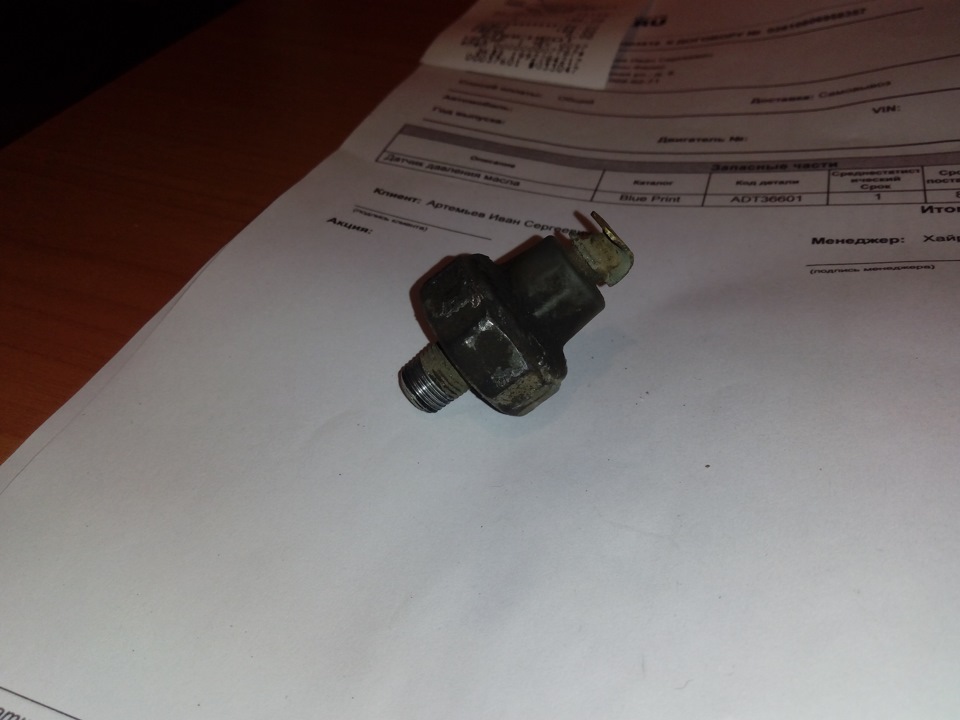
Here is the new sensor. I took a non-original, from BluePrint, it costs something 180r.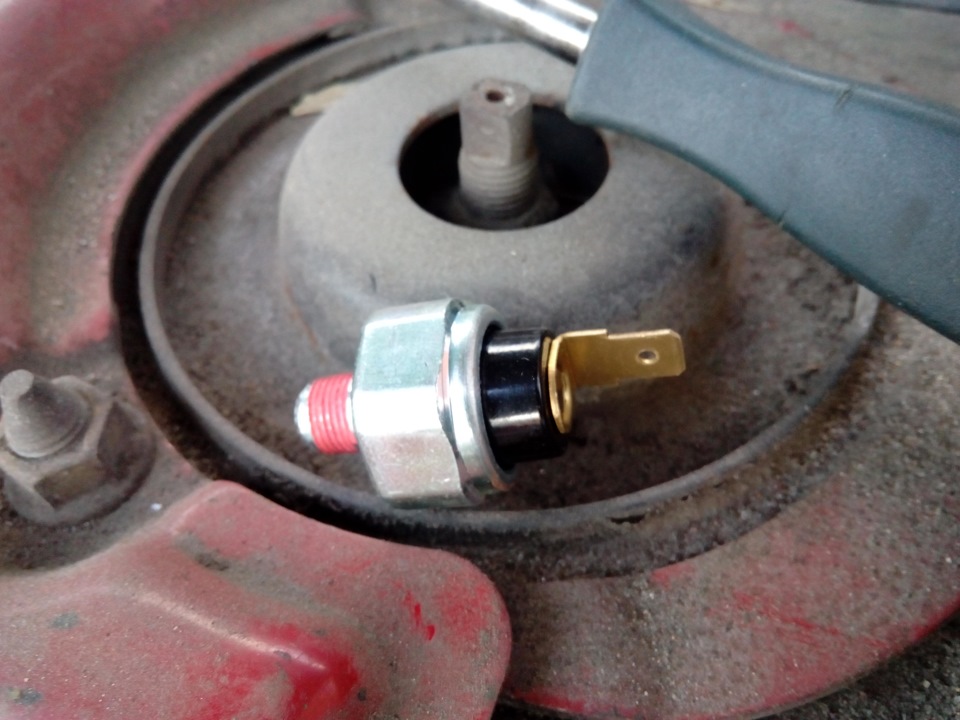
The sensor is located directly under the receiver, somewhere in the middle, it is clearly visible. It’s quite possible to crawl there, though it’s wildly inconvenient, there are only hoses and wiring around, I tore off all my hands. On a hot engine is not an option at all!
Here is a general view, it is approximately clear that it is not so deeply hidden. 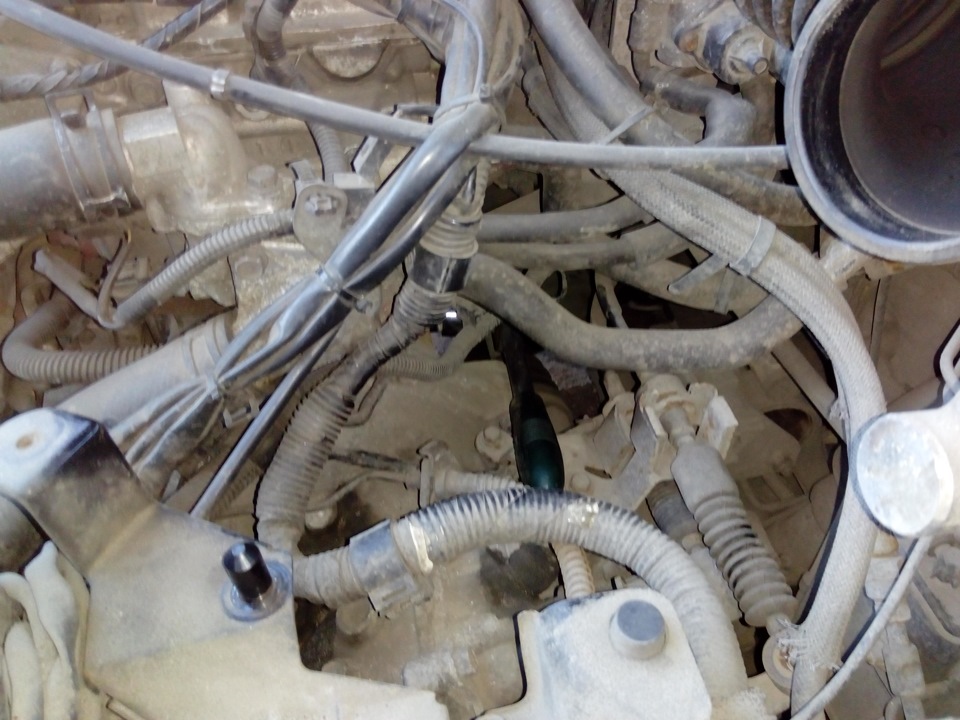
Here's a close-up. Head on the sensor, the most important thing is not to rush.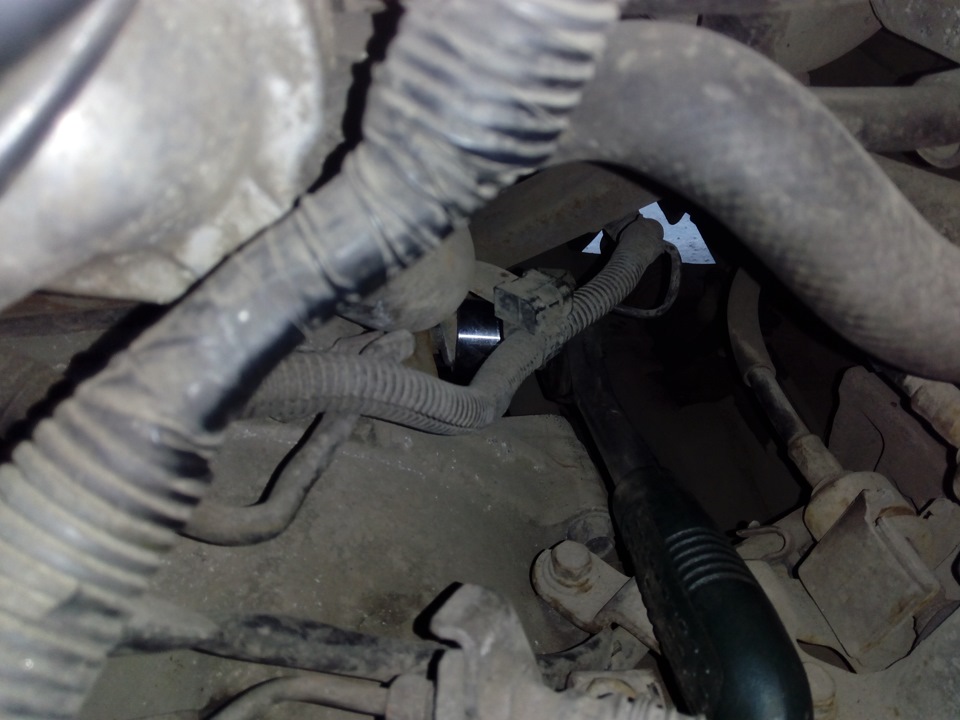
But with gradual scrolling, the sensor can be unscrewed. It took me 10-15 minutes to do this. The new sensor was at 24, here you also need a longer head, but a short one will do. After another 10 perversions in a bent state, the sensor is tightened to the waist under the hood to the end. Then he threw the wire, put everything back and started it. The oil lamp immediately went out and did not light up again. Warmed up, drove — everything is fine! Then he took off the air again and climbed with his hand to the sensor to make sure that everything is dry and the oil does not flow! That's actually all.
I hope this post is useful to someone. Thank you all for your attention.
Source: http://www.drive2.ru/l/6800324/